

Which plan will actually speed your content production without wasting budget? You’ll learn a simple, practical way to compare monthly, annual, and team tiers so you pick what fits your goals and campaign volume.
This how-to names the product and walks you through the steps to lock in savings. It shows how script-to-video, image-to-video, and the AI editor speed up creation and keep brand assets consistent.
You’ll also see three high-impact benefits for small businesses that make ROI math straightforward, plus a short checklist to weigh alternatives like Lumen5 and InVideo.
Before you buy, we note refund and money-back policy status — check vendor site — and give a step-by-step coupon walkthrough so you capture discounts on monthly or annual billing.
Key Takeaways
- Compare monthly vs. annual vs. team tiers to match features to needs.
- Use script-to-video and AI editing to cut production time.
- Three clear benefits help you justify spend to stakeholders.
- Follow the coupon walkthrough to secure immediate savings.
- Quick checklist helps decide between this tool, Lumen5, and InVideo.
What You’ll Achieve with This How-To Guide
Use this how-to to choose the right plan and get a campaign-ready project in under an hour. You’ll leave with clear next steps and settings that reduce production time and scope creep.
Who this guide is for
You are a performance-focused marketer or a small-business owner who needs more video with less effort. You want repeatable outputs without hiring a full production team.
What you’ll decide and set up today
By the end, you’ll select a billing tier (monthly, annual, or team) and configure your first project. You’ll also complete brand kit settings—fonts, colors, and logo—for consistent outputs.
- Pricing visibility: you’ll know where to find current monthly, annual, and team rates on the vendor site and which lever gives the best value.
- Forecast inputs: plug three small-business benefits into your ROI model to estimate how many videos you need to scale profitably.
- Creative flow: move from draft copy to an organized storyboard and story strip so execution is predictable.
- Checkout readiness: follow a simple coupon process at purchase and a checklist to verify refund policy details on the vendor site.
| Task | Outcome | Why it matters |
|---|---|---|
| Pick plan | Monthly, annual, or team chosen | Matches budget to campaign volume |
| Set up project | First project ready to build | Saves time on future campaigns |
| Complete brand kit | Fonts, colors, logos locked | Ensures consistent brand output |
| Apply coupon & verify refund | Discount applied; policy reviewed | Protects budget and reduces risk |
Next, you’ll see a quick overview of the core editor features you’ll use every day.
Quick Overview: What the Tool Offers Marketers
A marketer’s workflow improves when script, asset, and edit tools live in one browser tab. You move from concept to export without juggling files or vendors.
Script to video, image to video, and AI video editor essentials
Script-to-video: Paste your copy and the AI matches visuals, inserts transitions, and adds voiceover. That turns a short brief into a polished clip in minutes.
Image-to-video: Convert static photos into motion with background music and realistic narration. This keeps social feeds full between shoots.
AI editor: Edit in-browser with auto-transcription, captions, and lifelike text-to-speech. Export formats suit feed ads and YouTube without rework.
Why fast, branded video matters for campaigns
Fast, consistent video lets you test hooks and iterate on ad creative quickly. Use reusable templates to lock brand voice across every story and sequence of scenes.
- Produce more deliverables per week without extra hires.
- Standardize branding so assets ship on-message.
- Speed approvals and versioning to capture trending moments.
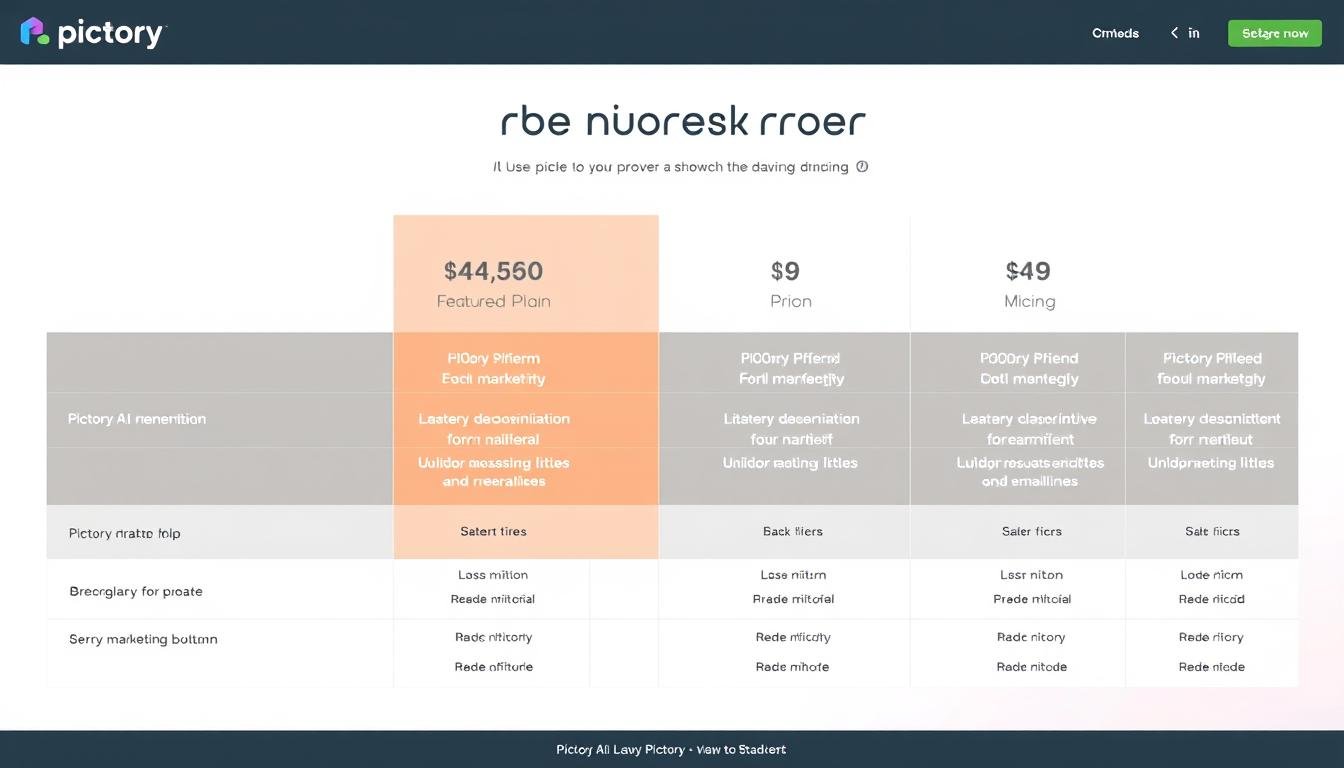
Pictory Pricing Tiers at a Glance
Pick a pricing tier that fits how often you publish and who needs access.
Monthly plan — check vendor site
When to pick it: Choose monthly if you need short-term flexibility or want to test the platform during a campaign window.
Annual plan — check vendor site
When to pick it: Opt for annual if you plan steady output and want better long-term value. Annual terms often include added credits or templates beyond simple savings.
Team plan — check vendor site
When to pick it: Select team if multiple contributors need shared projects, role controls, and more seats for approvals.
Before you buy: Confirm current feature limits for exports, video length, brand kit access, and captions on the vendor site. Verify whether premium stock, voice libraries, or brand templates require add-ons.
| Plan | Typical inclusions | Best for | Action |
|---|---|---|---|
| Monthly | Core editor access, basic exports | Short tests, one-off campaigns | Verify limits on vendor site |
| Annual | Same core features + potential bonuses | Regular creators seeking value | Confirm extra credits or templates |
| Team | Shared projects, roles, seats | Cross-functional marketing teams | Review seat counts and permissions |
Small-Business Benefits You Can Bank On
Small businesses gain measurable ROI when video production moves from a multi-day slog to minutes. You keep costs down and scale faster by using a single workflow that handles scripting, voice, captions, and export.

Lower production time from days to minutes
Shrink turnaround by moving from script to export inside one editor. Automated voiceovers and captions cut manual steps so you can publish faster.
That speed means more tests per month and faster data to justify ad spend.
Consistent branding across scenes and projects
Use templates and a brand kit to lock colors, fonts, and tone across every scene. Consistency reduces revision cycles and speeds approvals.
Fewer back-and-forth edits lowers agency costs and protects your margins.
Scalable content repurposing for social and ads
Export aspect ratios, trims, and cuts from one master to feed TikTok, Instagram, YouTube, and paid ads. Repurposing multiplies asset value and shortens campaign build time.
- Accessibility & SEO: Auto-captions and transcripts lift completion and discoverability.
- Lower fees: Do routine edits in-house and save external spend for high-impact work.
- Faster testing: More variations let you find winning hooks and scale what works.
Hands-On: Build Your First Project Using the story tab and scene strip
Get started by creating a new project and opening the story tab. Paste your script or a short bullet list and let the AI produce an initial scene sequence. This saves time and sets a clear visual plan.
Create a new project and add your story
Paste your copy into the story tab and accept the auto-generated draft. If you work from images, import them and use Image to Video to build a base sequence.
Arrange scenes in the strip and refine timing
Switch to the scene strip to drag-and-drop order, split, or merge scenes. Aim to land the hook in the first three seconds and place your CTA at the end.
Use the strip timeline to trim dead air and tighten pacing for the platform you’ll publish to.
Add voiceover, music, and captions for impact
Add voiceover via text-to-speech or upload your own track. Match music energy to the opening scene to hold attention.
Turn on auto-captions and style them to your brand. Test legibility on mobile and adjust contrast where needed.
Export settings for paid social and YouTube
Paid social: export vertical (1080×1920) or tall feed (1080×1350) with louder normalization and bold captions. YouTube: export 1920×1080 with a higher bitrate and a clean end slate for channel branding.
- Review scenes end-to-end to confirm narrative flow.
- Replace generic B-roll in the assets tab so each scene supports your message.
- Save a template so future projects start faster.
Working Faster: Master the tab, scene, and strip workflow
Start edits where words matter: refine narration in the story tab, then tune looks and timing. This approach keeps your messaging fixed while you test visual options fast.
Navigate tabs to switch from copy to visuals
Navigate tabs to switch from copy to visuals
Use the story tab to edit narration and on-screen text. Save a version, then jump to the visuals tab to swap footage and overlays without altering copy.
Switch to audio tools to quick-test voice and music. This parallel flow cuts back-and-forth clicks and speeds iteration on each project.
Batch-edit multiple scenes to save time
Leverage batch selection to update fonts, lower thirds, or caption style across many scenes at once. Batch edits remove repetitive work and keep brand rules enforced.
In the scene strip, group related moments to move hooks, testimonials, or benefits together. Grouping makes large rearranges painless.
- Apply transcription-based editing to trim filler words across every scene.
- Save reusable presets for captions, transitions, and brand colors to apply instantly.
- Lock completed scenes to protect timing while you experiment elsewhere.
- Use versioning to compare openings or CTAs without losing your baseline cut.
| Action | Where | Why it speeds work |
|---|---|---|
| Refine narration | story tab | Keeps copy stable while visuals change |
| Batch style update | visuals tab / strip | Applies branding across scenes in one step |
| Transcription trims | AI editor | Removes filler and tightens pacing |
Checklist: review copy in the story tab, perform batch visual updates, then finalize pacing in the strip. Repeat until the project matches your target runtime and message.
Which Pictory Plan Fits Your Goals Right Now
Pick the plan that aligns with how many projects you run and who needs access.
If you publish a few videos per month, start with the monthly tier to validate fit and protect cash flow. Try one campaign end-to-end before committing long term.
If you have a steady pipeline, annual usually gives the best value. Confirm current pricing and any onboarding bonuses on the vendor site before you switch.
If multiple stakeholders touch the same work, choose the team plan for shared access, roles, and consolidated approvals. Map expected scenes per deliverable and total outputs per month so limits won’t throttle you.
“This approach helps you avoid surprise export caps and ensures the plan supports longer-form or series content.”
Also confirm whether advanced caption control, brand kits, stock libraries, export length caps, and storage are included at your chosen tier. Pick the smallest plan that meets today’s needs with headroom for the next quarter.
| Plan | Best for | Key limits to verify |
|---|---|---|
| Monthly | Single-brand testing | Exports, storage, scene counts |
| Annual | Regular output with value | Extra credits, templates, length caps |
| Team | Multi-user workflows | Seats, roles, project sharing |
Team Collaboration and Approvals on the Team Plan
Teams move faster when assets, comments, and approvals live in one shared workspace. Centralized projects reduce email threads and keep everyone aligned on priorities.

Shared projects, roles, and version control
Use shared projects to centralize assets, drafts, and comments so marketing, creative, and stakeholders work in one place. That single source of truth speeds reviews and removes conflicting files.
Assign roles and permissions to control who can edit a scene versus who can comment. This prevents accidental edits and keeps the master cut intact.
Track versions to compare iterations and roll back without losing progress. Version history reduces rework when preferences change late in the process.
- Standardize brand kits so every new scene inherits approved fonts, colors, and captions.
- Build a staged approval flow: creative pass, brand review, stakeholder sign-off tied to checklists.
- Document naming conventions and file structure to scale collaboration as volume grows.
| Feature | Benefit | Action |
|---|---|---|
| Shared projects | Single source of truth | Centralize assets and comments |
| Roles & permissions | Fewer accidental edits | Set edit vs. comment rights |
| Version history | Safer iteration | Compare and roll back quickly |
Refunds and Money-Back Policy
It pays to confirm refund rules before you buy. Refund timelines and eligibility can change; always refer to the vendor’s published policy first. This saves time if you need to reverse a charge or adjust a plan mid-cycle.
Current policy — check vendor site
Review the official terms on the vendor site to confirm eligibility, timelines, and any special conditions. Policies often vary by monthly, annual, or team plans and may treat trials differently.
How to request a refund — check vendor site
Follow the vendor’s stated process—typically from your account billing area or via support ticket. Save order numbers, billing emails, and timestamps so your request moves faster.
- Confirm whether refunds are prorated when you upgrade, downgrade, or cancel mid-cycle.
- Keep documentation of issues: screenshots, error logs, and correspondence.
- Note response windows and required proof to speed resolution.
| Item | Where to find | Why it matters |
|---|---|---|
| Eligibility rules | Vendor refund page | Determines if you qualify |
| Request method | Account billing or support | Correct channel avoids delays |
| Proration policy | Terms & FAQ | Impacts returned amount |
“Document everything you submit; clear records shorten dispute time.”
How to Claim a Pictory Discount or Coupon
Apply a coupon at checkout to lock in savings, then confirm the final totals before you pay. Follow the steps below so the promo applies as expected and you avoid surprises at payment.
Step-by-step: Apply coupon at checkout
- Start on the vendor pricing page and select the plan you want. Proceed to checkout but do not enter payment details.
- Find the coupon or promo code field at checkout and paste your code exactly as provided. Watch for extra spaces or missing characters.
- Click apply and verify the discount shows in the order summary before you type card information.
- Capture a screenshot of the order summary with the applied discount and final amount for your records.
- If the code fails, contact support via the chat or billing email listed on the checkout page and ask them to validate the promo.
Verify monthly vs. annual savings before purchase
Open the plan selector and compare the final totals after the coupon. Confirm whether monthly or annual yields the best net price once the promo is applied.
- If you select a team plan, check whether the coupon applies per seat or per account to avoid billing surprises.
- Tip: Multiply final per-seat costs by expected users and run a quick one-year total to compare real savings.
Pictory vs. Lumen5 vs. InVideo: What Marketers Should Compare
Compare each vendor by how many minutes it takes to move from a script draft to a publish-ready cut for one scene. Focus on practical steps you must perform, not just render times.
Speed from script to publish-ready video
Measure end-to-end time: time the process from paste-to-first-cut and note manual edits per scene. Faster tools trim review cycles and let you test more creatives weekly.
Brand control, templates, and asset rights
Verify brand kit limits, template flexibility, and caption styling so each scene matches your visual rules. Confirm licensing for stock footage and music to avoid rights issues on ads.
Team workflows and support options
Assess multi-seat collaboration, comments, and version history so teams iterate without chaos. Also evaluate support channels and response times—rapid help matters the day you launch.
“Build a short test list of must-haves—captions, voiceover, transcription, brand kits—and run the same sample content across each platform.”
| Decision point | Why it matters | Action |
|---|---|---|
| Speed | Reduces time to live | Time a single scene end-to-end |
| Brand control | Keeps assets consistent | Test templates and caption styles |
| Support & collaboration | Limits launch risk | Review seats, comments, SLAs |
Time-Saving Tips: Copy, list, and time controls for better scenes
Start by turning each paragraph of your script into a single, actionable shot. That simple step creates a shot list that maps copy to visuals and keeps each scene focused on one message.

Turn copy into a shot list that maps to scenes
Create a short list that pairs one idea with one visual. Use Script to Video to generate an initial sequence, then edit the list so each scene has a clear purpose.
Tip: Label scenes in the strip with a single-line brief—hook, proof, demo, or offer—so collaborators know intent at a glance.
Use time controls for tighter hooks and CTAs
Trim hook scenes to the minimum frame that conveys your benefit. Use the timeline to shorten openings and give demo scenes slightly more duration for clarity.
Leverage transcription and auto-captions to remove filler and tighten pacing. Captions also act as visual anchors; keep lines short for mobile readability.
- Break the script into one-message-per-scene to prevent cluttered visuals.
- Front-load proof in the first scene and compress the hook with precise trims.
- Replace generic B-roll with product-relevant clips and overlays so every scene moves the story forward.
- Use the strip to reorder scenes quickly when testing intros or CTA placements.
- Save the best patterns as templates—hook, proof, demo, offer—to speed future edits.
“Keep each scene accountable: if it doesn’t add to the message, remove or repurpose it.”
Conclusion
Wrap this up by selecting the plan that matches your production cadence, applying any coupon at checkout, and confirming refund terms on the vendor site before you pay.
Start with one focused build. Use Script to Video, refine each scene for tight pacing and clarity, then export using platform-optimized settings for ads or social.
Standardize branding early so every scene ships on-message and shortens review cycles. Save winning cuts as templates, document your process, and run weekly iterations.
Compare with Lumen5 and InVideo using the same checklist. Then double down on the tool that speeds your workflow most and scale from there.